download free, software for Microsoft Windows (and now some for Mac OSX and Linux) to control theatrical lighting. Some of this software is Open Source so it includes source code that allows you to modify it. My software works with the following DMX interface hardware (some only supports the Enttec Pro): Enttec OpenDMX USB interface (just $60). SweetLight is a powerful multi-platform controller offering users unparalleled capabilities to manage and control DMX lighting. The SweetLight DMX controller system includes powerful lighting control software (available as a free download) and a set of DMX interfaces to suit your requirements. QLC+ is a free and cross-platform software to control DMX or analog lighting systems like moving heads, dimmers, scanners etc. This project is a fork of the great QLC project written by Heikki Junnila that aims to continue the QLC development and to introduce new features.
The first choice of lighting professionals
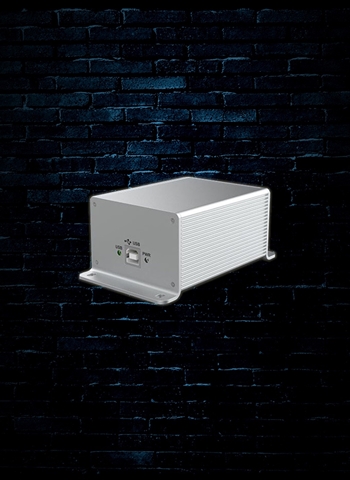
Products don’t become an industry standard for no reason. The DMX USB Pro has proven for a number of years that it’s both a reliable and robust product usable for a number of applications. It has been adopted by multiple professionals across the world. The DMX USB Pro allows for simple USB 2.0 support through a robust USB-B connection, sending or receiving a physical DMX512 signal using PCs, Macs and Linux devices running a broad array of third-party software.
With industry standard-5 pin input and output connections as well as 1500V full isolation for both data and power lines, you can rest assured that your computer will be protected from any stray voltages and faults that may occur on the DMX line. Furthermore, this DMX USB interface features an internal frame buffer for consistent DMX generation when outputting. This means it isn’t dependant on your PC’s processor to regulate a steady, reliable flow of data and to provide a stable data stream regardless of your PC’s workload.
You can also view the activity of the DMX USB Pro quickly using it’s LED status indicator. Use ENTTEC’s free PRO-Manager software to test, update and configure your USB Pro alongside other products in the ENTTEC range. Pro Manager is easy to use and runs on both Windows and Mac (up to OSX 10.11). You can even change the firmware to support your exacting requirement (RDM or Non-RDM). The DMX USB Pro is compatible with an enormous range of commercial and free software.
So no matter what software you choose, you know you can rely on ENTTEC DMX USB PRO to do the job.
Features
Widely compatible
Designed for simple USB connection across Windows, Mac and Linux, the DMX USB Pro is compatible with an enormous range of commercial and free software. So no matter what software you choose, you know you can rely on ENTTEC DMX USB PRO to do the job.
Windows, Mac and Linux
Industry Standard USB 2.0 support on Windows PC and Mac OSX, and popular Linux flavours. Thanks to FTDI drivers, which enable the USB communication between your computer and DMX USB PRO, it is compatible with the majority of computers. Even Raspberry Pi is now supported, for the hobbyist within you.
DMX Input or Output
The DMX USB Pro supports either, DMX Input or DMX Output mode and comes RDM enabled too (when running correct firmware). When outputting DMX, the Pro makes use of its internal frame buffer for steady DMX Generation way ahead of the competition. No, no matter what project you have, the DMX USB PRO is the perfect device to accompany your computer and software to provide a cost-effective, reliable DMX connection.
Change it as you please
Refresh Rate is fully configurable from 1 to 40 Fps. Break time is configurable from 96uS to 1.3mS, and MaB is configurable from 10.6uS to 1.3mS. You can even change the firmware to support your requirement. Two interchangeable versions of firmware (RDM and Non-RDM) have been created to allow quick changing between settings using the PRO-Manager.
Isolated to protect
1500 V full isolation (data & power lines to protect your computer from surges)
Get started!
Compatible Apps
Recommended App: D-PRO
D-PRO is a software-based lighting controller which plays well with a host of different professional level hardware devices from ENTTEC.
The good partner for DMX USB PRO.It includes D-PRO Player, a touch screen friendly interface to easily control your cues.An OSC controller (such as TouchOSC) or MIDI input can be used to remotely trigger D-PRO.And it’s Windows and Mac OSX compatible.
3rd Party Controller Apps
- Chameleon Mac OSX
- Chamsys MagicQ Windows
- Chromakinetics Windows
- Cue Player Lighting Windows
- D::Light Win / Mac / Linux
- DAZL Windows
- DMX 512 external for Max Win / Mac / Linux
- DMXControl Windows
- DigiSelect Windows
- FootLight Mac OSX
- Freestyler Windows
- Hsyco (Home Automation) Linux
- JS DMX Project Windows
- Jinx! LED Matrix Control Windows
- LXConsole Mac OSX
- LightFactory Windows
- LightJams Windows
- Lightforge Windows
- Lightkey Mac OSX
- Lightning DmxControl Mac OSX
- liveShowsoftware Windows / MacOS
- MaizeDMX Windows / MacOS
- Millumin Mac OSX
Official Tool: PRO Manager
PRO-Manager allows you to test and update your ENTTEC USB PRO. It’s easy to use and runs on both Windows and Mac (up to OSX 10.11).
3rd Party Controller Apps
- Plexus Windows
- QLab 4 Mac
- QLC + Win / Mac / Linux
- QuickShow – Pangolin Windows
- Show Cue Systems Windows
- ShowMagic Windows
- TJShow Windows
- VirtualLightDesk Mac OSX
- Vixenlights Windows
- White Cat Lighting Board Windows
3rd Party Visualizer Apps
- Capture Windows
- wysiwyg Windows
3rd Party Media Server Apps
- MX Wendler Win / Mac / Linux
- MediaMaster Express Win / Mac / Linux
- Modul8 Mac OSX
- Resolume Arena Win / Mac / Linux
3rd Party Utilities
- LXScriptPlayer Mac OSX
- WidgetRec – A DMX Receiver/viewer Windows
- vvvv – multi purpose toolkit Windows
Downloads
Documents
Firmware
Apps
Drivers
Developers
Others
Application Notes
Free Dmx Mac File
Related products
The Optimized Storage features of your Mac help you save storage space by storing your content in iCloud and making it available on demand:
- When storage space is needed, files, photos, movies, email attachments, and other files that you seldom use are stored in iCloud automatically.
- Each file stays right where you last saved it, and downloads when you open it.
- Files that you’ve used recently remain on your Mac, along with optimized versions of your photos.
If you haven't yet upgraded to macOS Sierra or later, learn about other ways to free up storage space.
Find out how much storage is available on your Mac
Choose Apple menu > About This Mac, then click Storage. Each segment of the bar is an estimate of the storage space used by a category of files. Move your pointer over each segment for more detail.
Click the Manage button to open the Storage Management window, pictured below.
Manage storage on your Mac
The Storage Management window offers recommendations for optimizing your storage. If some recommendations are already turned on, you will see fewer recommendations.
Store in iCloud
Click the Store in iCloud button, then choose from these options:
- Desktop and Documents. Store all files from these two locations in iCloud Drive. When storage space is needed, only the files you recently opened are kept on your Mac, so that you can easily work offline. Files stored only in iCloud show a download icon , which you can double-click to download the original file. Learn more about this feature.
- Photos. Store all original, full-resolution photos and videos in iCloud Photos. When storage space is needed, only space-saving (optimized) versions of photos are kept on your Mac. To download the original photo or video, just open it.
- Messages. Store all messages and attachments in iCloud. When storage space is needed, only the messages and attachments you recently opened are kept on your Mac. Learn more about Messages in iCloud.
Storing files in iCloud uses the storage space in your iCloud storage plan. If you reach or exceed your iCloud storage limit, you can either buy more iCloud storage or make more iCloud storage available. iCloud storage starts at 50GB for $0.99 (USD) a month, and you can purchase additional storage directly from your Apple device. Learn more about prices in your region.
Optimize Storage
Click the Optimize button to save space by automatically removing watched movies and TV shows. When storage space is needed, movies or TV shows that you purchased from Apple and already watched are removed from your Mac. Click the download icon next to a movie or TV show to download it again.
Your Mac will also save space by keeping only recent email attachments on this Mac when storage space is needed. You can manually download any attachments at any time by opening the email or attachment, or saving the attachment to your Mac.
Optimizing storage for movies, TV shows, and email attachments doesn't require iCloud storage space.
Empty Trash Automatically
Empty Trash Automatically permanently deletes files that have been in the Trash for more than 30 days.
Reduce Clutter
Reduce Clutter helps you identify large files and files you might no longer need. Click the Review Files button, then choose any of the file categories in the sidebar, such as Applications, Documents, Music Creation, or Trash.
You can delete the files in some categories directly from this window. Other categories show the total storage space used by the files in each app. You can then open the app and decide whether to delete files from within it.
Learn how to redownload apps, music, movies, TV shows, and books.
Where to find the settings for each feature
Free Dmx Mac App
The button for each recommendation in the Storage Management window affects one or more settings in other apps. You can also control those settings directly within each app.
- If you're using macOS Catalina or later, choose Apple menu > System Preferences, click Apple ID, then select iCloud in the sidebar: Store in iCloud turns on the Optimize Mac Storage setting on the right. To turn off iCloud Drive entirely, deselect iCloud Drive.
- If you're using macOS Mojave or earlier, choose Apple menu > System Preferences, click iCloud, then click Options next to iCloud Drive. Store in iCloud turns on the Desktop & Documents Folders and Optimize Mac Storage settings.
- In Photos, choose Photos > Preferences, then click iCloud. Store in iCloud selects iCloud Photos and Optimize Mac Storage.
- In Messages, choose Messages > Preferences, then click iMessage. Store in iCloud selects Enable Messages in iCloud.
- If you're using macOS Catalina or later, open the Apple TV app, choose TV > Preferences from the menu bar, then click Files. Optimize Storage selects “Automatically delete watched movies and TV shows.”
- In you're using macOS Mojave or earlier, open iTunes, choose iTunes > Preferences from the menu bar, then click Advanced. Optimize Storage selects “Automatically delete watched movies and TV shows.”
- In Mail, choose Mail > Preferences from the menu bar, then click Accounts. In the Account Information section on the right, Optimize Storage sets the Download Attachments menu to either Recent or None.
Empty Trash Automatically: From the Finder, choose Finder > Preferences, then click Advanced. Empty Trash Automatically selects “Remove items from the Trash after 30 days.”
Other ways that macOS helps automatically save space
With macOS Sierra or later, your Mac automatically takes these additional steps to save storage space:
- Detects duplicate downloads in Safari, keeping only the most recent version of the download
- Reminds you to delete used app installers
- Removes old fonts, languages, and dictionaries that aren't being used
- Clears caches, logs, and other unnecessary data when storage space is needed
How to free up storage space manually
Even without using the Optimized Storage features described in this article, you can take other steps to make more storage space available:
- Music, movies, and other media can use a lot of storage space. Learn how to delete music, movies, and TV shows from your device.
- Delete other files that you no longer need by moving them to the Trash, then emptying the Trash. The Downloads folder is good place to look for files that you might no longer need.
- Move files to an external storage device.
- Compress files.
- Delete unneeded email: In the Mail app, choose Mailbox > Erase Junk Mail. If you no longer need the email in your Trash mailbox, choose Mailbox > Erase Deleted Items.
Learn more
Free Dmx Mac Os
- The Storage pane of About This Mac is the best way to determine the amount of storage space available on your Mac. Disk Utility and other apps might show storage categories such as Not Mounted, VM, Recovery, Other Volumes, Other, Free, or Purgeable. Don't rely on these categories to understand how to free up storage space or how much storage space is available for your data.
- When you duplicate a file on an APFS-formatted volume, that file doesn't use additional storage space on the volume. Deleting a duplicate file frees up only the space required by any data you might have added to the duplicate. If you no longer need any copies of the file, you can recover all of the storage space by deleting both the duplicate and the original file.
- If you're using a pro app and Optimize Mac Storage, learn how to make sure that your projects are always on your Mac and able to access their files.